
UX research | Product design
Elevating a learning product for global scale
Overview
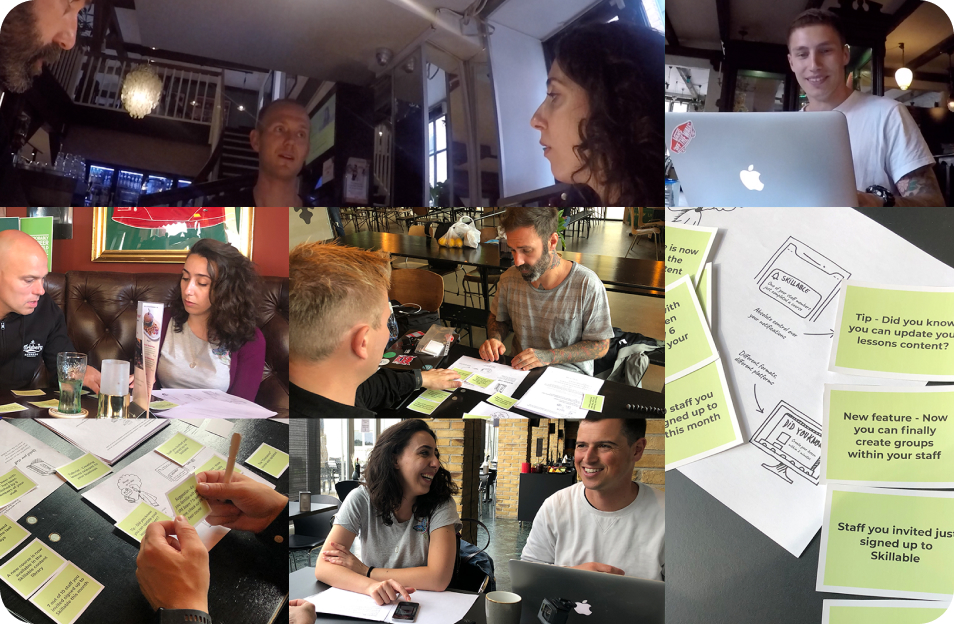
That discovery work across Denmark, the UK, and Finland pointed to one clear opportunity: turn onboarding into a structured, repeatable system managers could plan and reuse.
I led the product experience end to end, structure, flows, interaction model. The core decision was the path itself: lessons grouped by topic, tracked individually, reusable for every hire instead of rebuilt from memory. It solved for consistency. Whether it actually worked was a different question, one we didn't have an answer to yet.
A second discovery phase followed once Skillable was live. Engagement dropped, and so did the number of lessons managers were creating. When we asked why, managers were blunt about it: they didn't know if the lessons they'd spent hours building were actually helping anyone, whether a new hire was any closer to handling draught beers or brewing basics, or just clicking through.
Approach
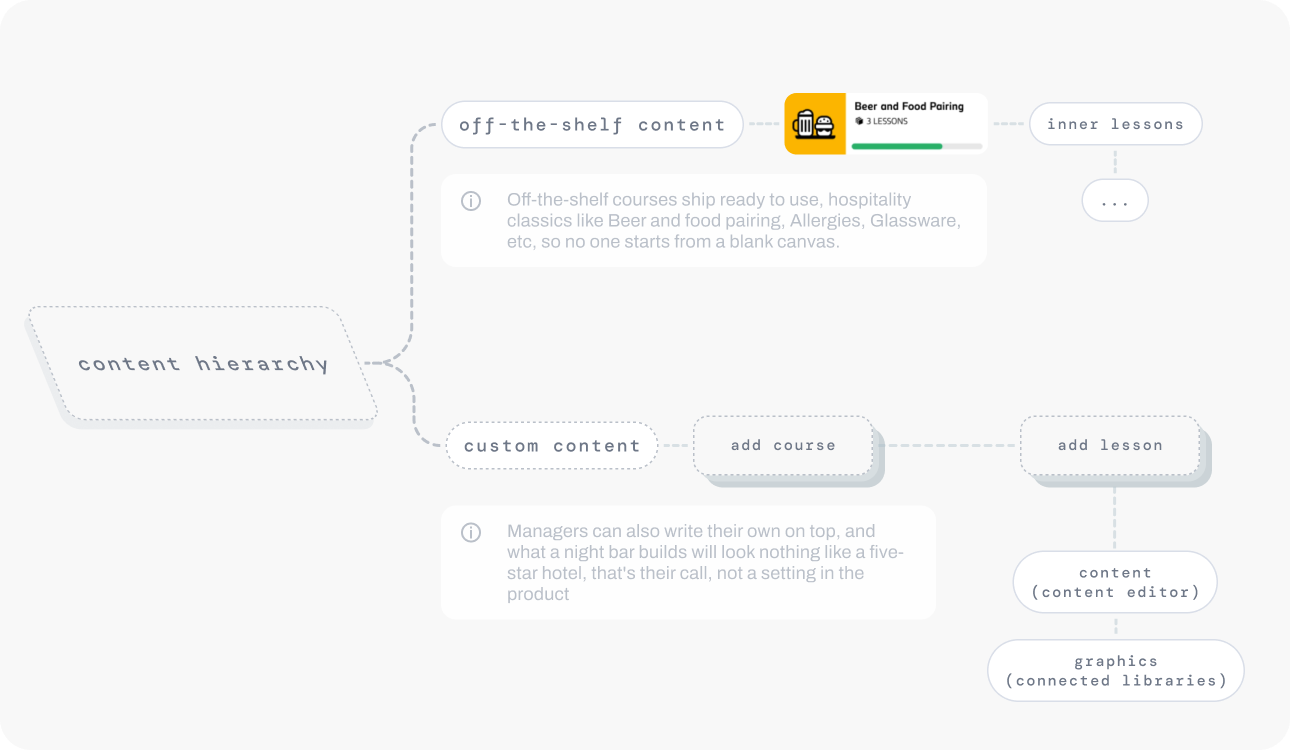
A reusable structure only works if there's something to put in it. Skillable shipped with a library of ready-made courses, hospitality classics like beer and food pairing, allergies, glassware, so a manager wasn't starting onboarding from a blank canvas. The same authoring tools were opened up to managers directly too, so a night bar and a five-star hotel could each build out whatever was specific to their own business, without leaving the app to do it.
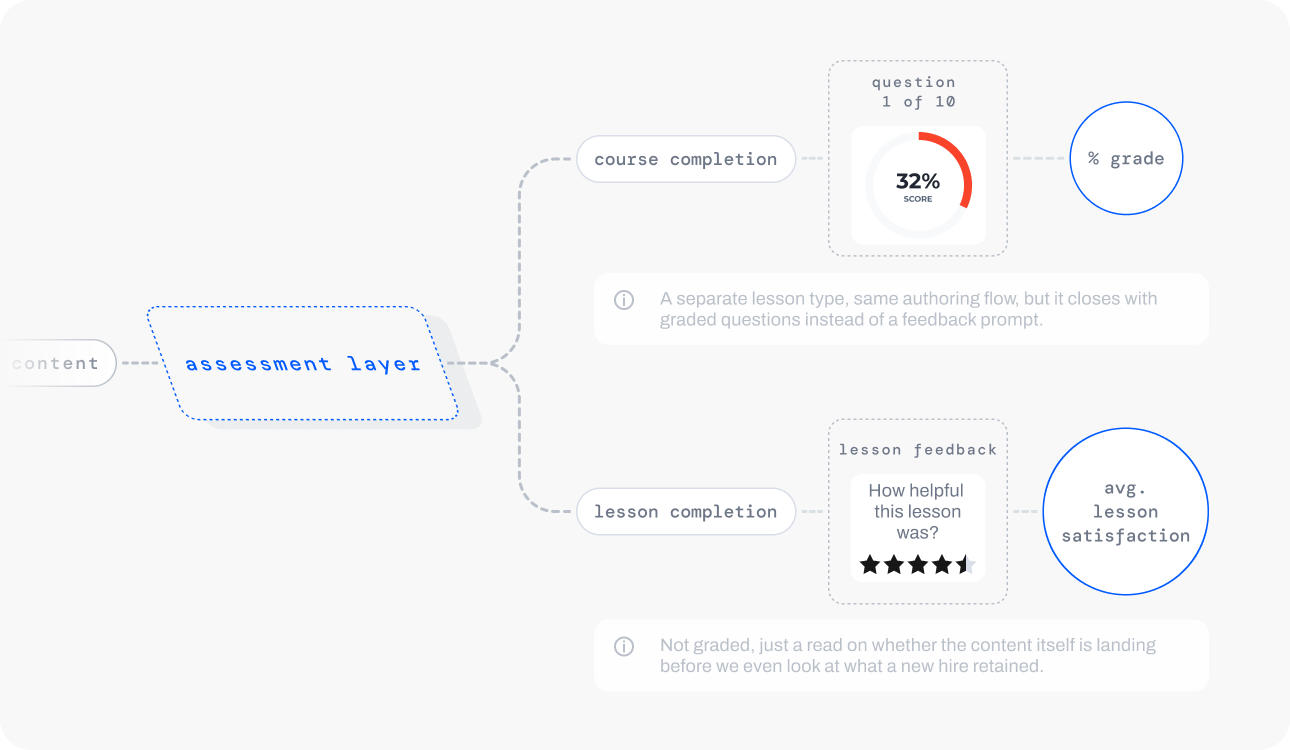
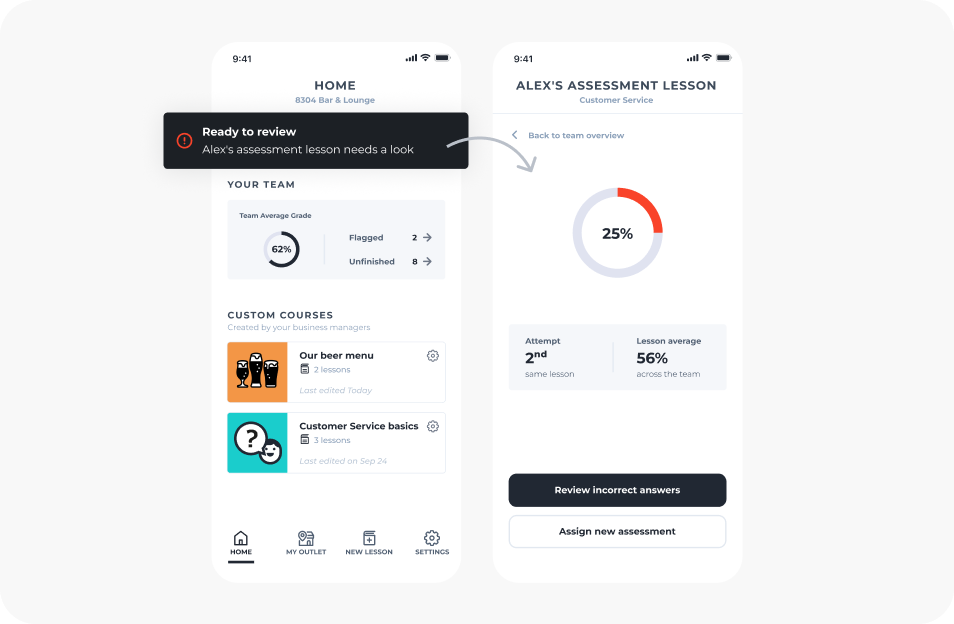
That still left the question managers had actually raised: was any of it working. I split evaluation into two separate signals instead of one. Regular lessons closed with a quick prompt, was this useful, a read on whether the content itself was landing. A separate assessment lesson type closed with graded questions instead, checking what a new hire could actually do afterward, not just whether they'd clicked through.
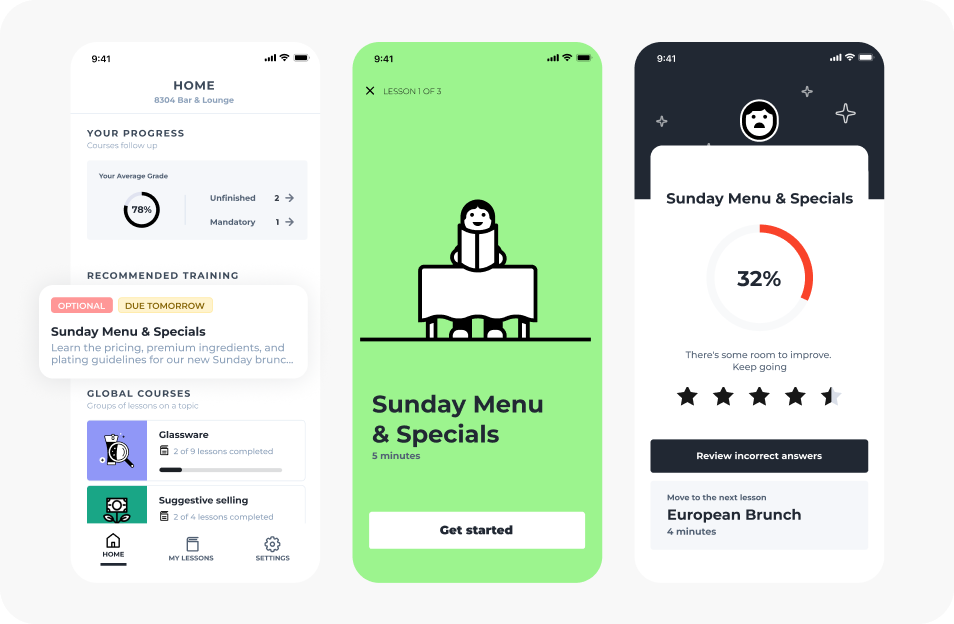
Here's what that grading actually looks like from the receiving end.
On the other side, here's what a manager sees when someone needs support.
Outcome
- Skillable is live across three markets, Denmark, Finland and the UK, used by more than 2,000 outlets.
- Lesson creation jumped 30% once the evaluation layer shipped, managers had a reason to build again once they could see it was landing.
- Managers described a real shift once the assessment layer was live: less time re-explaining the same basics to every new hire, and a clear read on who was ready to move into something more specialized.
- Skillable was built on Malty, Carlsberg's design system, rather than a one-off UI. That let the team move faster on execution and gave Skillable a consistent, tested foundation instead of starting component decisions from scratch.